



Get Easy Health Digest™ in your inbox and don’t miss a thing when you subscribe today. Plus, get the free bonus report, Mother Nature’s Tips, Tricks and Remedies for Cholesterol, Blood Pressure & Blood Sugar as my way of saying welcome to the community!



Passive heating: What it is and how it supports heart health
Have you heard of passive heating? It’s the idea that warming your body may produce some of the same heart and blood-vessel responses you get from exercise — even while you’re sitting still.
It’s one reason researchers are taking a closer look at the heart-health effects of saunas.
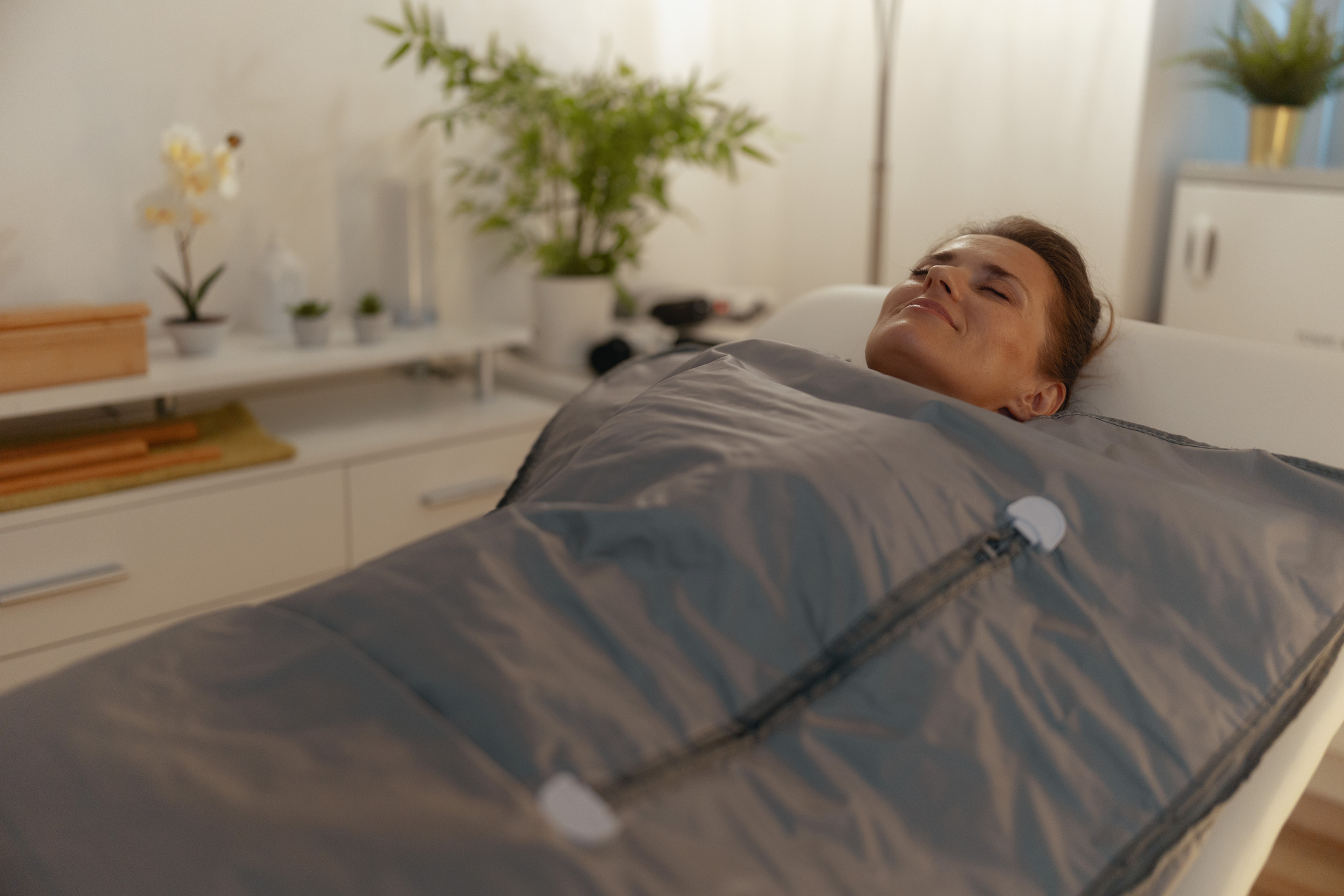
Now they’re testing a version you can use at home: an infrared sauna blanket.
In a preliminary study, just one hour inside the blanket sent participants’ heart rates climbing. So what does that response tell us about heart health? And if you don’t want to invest in a blanket, there may be another way to try passive heating that’s already in your home.
Quick answer
Passive heating raises your body temperature and makes your heart work harder during a session. Research on hot baths has also found short-term blood-pressure changes and a modest reduction in resting heart rate after repeated use. An early sauna blanket study found a strong immediate response, but it has not established whether regular blanket use brings lasting heart benefits.
What happens to your body in an infrared sauna blanket?
Researchers at St. Mary’s University recruited eight healthy adults whose average age was about 20. Each person rested for 60 minutes inside an infrared sauna blanket set to about 167°F. On another day, they rested in the same blanket with the heat turned off.
During the heated session, participants’ average temperature, measured under the tongue, rose from about 98.2°F to 100.8°F. Their average heart rate climbed from 83 to 139 beats per minute. They also lost an average of about 1.3 liters of sweat.
Those are substantial changes for people who were lying still. The researchers concluded that the blanket produced an immediate heat and cardiovascular response consistent with the heat stress seen in more traditional saunas.
The results come from a conference abstract, and each participant used the heated blanket for only one session. The study did not measure whether repeated use improves blood-vessel function, changes resting blood pressure or lowers heart-disease risk. It also cannot tell us how adults in their 40s, 50s or beyond would respond to the same hour of heat. However, previous studies involving older adults and a different form of passive heating certainly can…
«SPONSORED»
Why does passive heat make your heart beat faster?
When your body gets hot, your circulation shifts: more blood flows toward your skin to help release heat. Your heart beats faster to keep that blood moving.
That response helps explain the interest in passive heating. In research we’ve previously covered on hot baths and exercise, hot-water immersion increased heart rate and blood flow through the arteries. Exercise can produce those responses, too.
Of course, sharing a heart-rate response doesn’t mean a heated blanket does everything a workout does. Exercise challenges your muscles and bones and improves fitness in ways lying still cannot. And the blanket researchers did not measure arterial blood flow or test what happened after repeated sessions.
Their finding gives researchers a starting point: this particular blanket clearly delivered enough heat to make the body respond. The next question is whether that response translates into lasting heart-health improvements.
A hot bath as part of your heart health routine
If a sauna blanket doesn’t appeal to you, a hot bath offers another way to try passive heating. It also has a much longer research history.
A review of 20 hot-water immersion studies found that, compared with control conditions, a single session increased heart rate and lowered diastolic blood pressure by an average of 5 mmHg. Across studies of repeated immersion, resting heart rate fell by an average of 3 beats per minute.
Those are measurable effects. The reviewers found the overall evidence for improvement in other cardiovascular measures inconclusive, however. We also can’t assume that an infrared blanket will produce the same results as immersion in water.
For a longer-term perspective, a Japanese study published in 2020 followed more than 30,000 adults aged 40 to 59 for roughly 19 years. People who took a tub bath almost every day had a 28 percent lower rate of cardiovascular disease than those who bathed no more than twice a week. As we’ve covered previously, that’s an association; the study cannot prove that bathing caused the lower risk.
If you want to make a bath part of your routine, start with water that feels comfortably warm or hot. You don’t need to push yourself to tolerate extreme heat. Drink water and stand up slowly when you get out; heat can leave you lightheaded. If you have a heart condition or heat makes you feel unwell, ask your healthcare professional whether lengthy hot baths or sauna sessions are appropriate for you.
The sauna blanket finding makes passive heating more interesting — not because an hour in a blanket has been shown to prevent heart trouble, but because it gives researchers another way to study what heat does to the body. Meanwhile, a familiar bath offers a simpler place to start.
Editor’s note: There are perfectly safe and natural ways to decrease your risk of blood clots including the 25-cent vitamin, the nutrient that acts as a natural blood thinner and the powerful herb that helps clear plaque. To discover these and other secrets of long-lived hearts, click here for Hushed Up Natural Heart Cures and Common Misconceptions of Popular Heart Treatments!
Sources:
The Acute Physiological and Perceptual Responses to an Infrared Sauna Blanket – Towards Home-Based Passive Heat Therapy — International Journal of Exercise Science: Conference Proceedings
The health benefits of passive heating and aerobic exercise: To what extent do the mechanisms overlap? — Journal of Applied Physiology
The effects of hot-water immersion on cardiovascular and cardiorespiratory health of healthy adults: A systematic review and meta-analysis — Physiological Reports
Habitual tub bathing and risks of incident coronary heart disease and stroke — Heart
FAQs about passive heating and heart health
What is passive heating?
Passive heating means warming your body without generating the heat through physical activity. Hot baths, saunas and infrared sauna blankets are examples.
Can an infrared sauna blanket improve heart health?
That remains to be tested. The preliminary study found changes in temperature and heart rate during one session, but did not measure long-term health effects.
Is passive heating the same as exercise?
No. They can share some immediate cardiovascular responses, but passive heating does not provide all the benefits of moving your body.
Can a hot bath lower blood pressure?
A review found that hot-water immersion lowered certain blood-pressure measurements around a single session. It did not establish that bathing will lower everyone’s usual blood pressure over time.
Do I need an infrared sauna blanket to try passive heating?
No. A comfortably warm or hot bath is another option and has been studied more extensively than sauna blankets.

By Margaret Cantwell

«SPONSORED»
