



Get Easy Health Digest™ in your inbox and don’t miss a thing when you subscribe today. Plus, get the free bonus report, Mother Nature’s Tips, Tricks and Remedies for Cholesterol, Blood Pressure & Blood Sugar as my way of saying welcome to the community!




The thyroid-sleep apnea link stealing your deep sleep
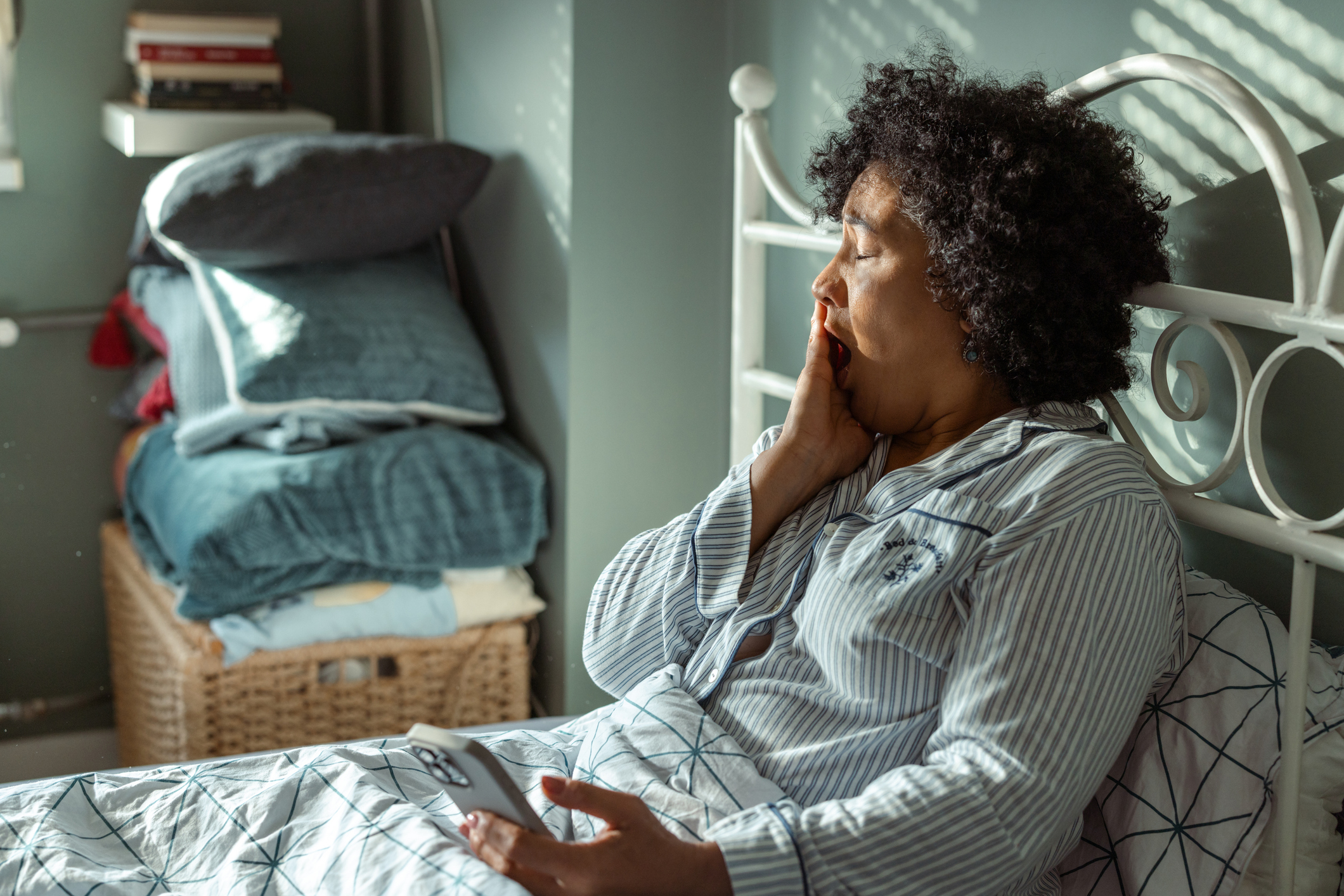
If you’ve ever dealt with thyroid issues, you know the exhaustion can feel different.
It’s not just “I stayed up too late” tired. It can feel like your body is running on a weak battery no matter how much you try to rest.
With thyroid problems, fatigue is often treated like the obvious symptom. Your thyroid slows down, your energy drops, your metabolism changes and you feel worn out.
But here’s what many people may not realize…
Sometimes the tiredness may not be coming from thyroid dysfunction alone.
It may also be coming from a sleep disorder that repeatedly steals oxygen, fragments your sleep and keeps you from getting the deep restoration your body needs.
That sleep disorder is obstructive sleep apnea.
And new research suggests hypothyroidism and sleep apnea may be more closely connected than many people realize.
When low thyroid and poor sleep overlap
Hypothyroidism happens when the thyroid does not produce enough thyroid hormone. And because thyroid hormones help regulate metabolism, body temperature, heart rate, energy use and more, low thyroid function can affect how you feel from head to toe.
The symptoms are familiar: fatigue, drowsiness, weight gain, dry skin, hair changes, constipation and brain fog.
Sleep apnea can create some of those same complaints.
Obstructive sleep apnea happens when the airway repeatedly becomes partly or completely blocked during sleep. Breathing pauses. Oxygen levels dip. The brain briefly wakes the body up enough to breathe again.
You may not remember those awakenings in the morning.
But your body does.
Over time, sleep apnea can leave you dragging through the day, fighting brain fog, waking with headaches, snoring loudly or feeling like sleep never really “worked.”
And because thyroid problems and sleep apnea can both cause fatigue, weight changes and trouble concentrating, one condition can easily hide behind the other.
That is exactly why this new research matters.

«SPONSORED»
Nearly half had both conditions
The study was conducted by researchers at the Federal University of São Paulo using data from the São Paulo Epidemiological Sleep Study, also known as EPISONO 2018.
Researchers analyzed 761 São Paulo residents who had laboratory testing and full-night polysomnography — the gold-standard sleep test that measures breathing, oxygen levels, sleep stages and awakenings overnight.
Hypothyroidism was found in 12.6 percent of the participants.
And among those with hypothyroidism, nearly half — 49.5 percent — also had obstructive sleep apnea.
That was higher than researchers expected.
People with hypothyroidism also had more fragmented sleep, woke more often during the night and had more sleep apnea. The study showed that the higher a person’s TSH level, the greater the likelihood of more severe apnea.
That can sound backwards until you understand how TSH works.
TSH stands for thyroid-stimulating hormone. When the thyroid isn’t producing enough hormone, the pituitary gland typically releases more TSH in an effort to push the thyroid harder.
So, in many cases, a higher TSH points toward a less active thyroid.
And the relationship appeared to run in the other direction too.
Severe sleep apnea was linked to more than twice the odds of hypothyroidism, suggesting the two conditions may influence each other.
That does not mean the study proved which one comes first.
It was cross-sectional, meaning researchers looked at the relationship at one point in time. They could not prove that hypothyroidism causes sleep apnea or that sleep apnea causes hypothyroidism.
But they did find enough of a connection to send a clear message:
If you have one of these conditions, the other may deserve a closer look.
Deep sleep may improve with thyroid treatment
One of the most interesting parts of the study involved hypothyroidism treatment.
Among participants diagnosed with hypothyroidism, those receiving thyroid hormone replacement therapy slept about 49 minutes longer per night than those who were untreated.
They also spent about 22 more minutes in stage N3 sleep.
That matters because N3 is deep sleep — the stage closely involved in physical restoration, tissue repair, immune function and memory consolidation.
In other words, deep sleep is not simply “nice to have.”
It is one of the major ways your body restores itself overnight.
So when treated thyroid patients spent more time in that stage, researchers saw it as evidence that thyroid hormone replacement may improve sleep architecture — the structure and quality of sleep across the night.
But there’s an important distinction.
Treating hypothyroidism does not automatically erase sleep apnea.
The researchers made it clear that the two conditions are distinct, even though they may interact. Thyroid treatment may improve certain sleep parameters, but people with sleep apnea still need proper evaluation and treatment for the apnea itself.
That’s especially important because both untreated hypothyroidism and untreated sleep apnea are associated with greater cardiovascular risk.
Sleep apnea repeatedly lowers oxygen during the night and places stress on the cardiovascular system. Hypothyroidism can contribute to changes in cholesterol, metabolism and body weight that may also affect cardiovascular health.
Together, those risks may add up.

«SPONSORED»
The questions worth asking
The takeaway is simple:
Don’t assume every symptom is “just your thyroid.”
And don’t assume every sleep problem is “just snoring.”
If you have hypothyroidism or Hashimoto’s and still wake up exhausted, snore loudly, gasp or choke during sleep, wake with headaches or struggle with daytime sleepiness, ask your healthcare practitioner whether a sleep apnea evaluation makes sense.
And if you already have sleep apnea but also experience fatigue, unexplained weight gain, cold intolerance, constipation, dry skin, hair changes or brain fog, ask whether your thyroid function has been checked.
That two-way approach is exactly what this research suggests may be important: people being treated for sleep apnea may benefit from having their thyroid function evaluated, while people with hypothyroidism may benefit from being assessed for sleep disorders.
Beyond that, there are everyday steps that can support better sleep and may help reduce obstructive sleep apnea symptoms for some people.
Regular exercise and maintaining a healthy weight can help. Avoiding alcohol close to bedtime may reduce airway relaxation during sleep. And for some people, sleeping on their side rather than their back can reduce apnea episodes.
But lifestyle changes aren’t a substitute for diagnosis and treatment.
Sleep apnea is treatable. Thyroid hormone levels can be measured and managed. And treating one problem doesn’t necessarily mean the other will disappear.
So if you’re doing everything right for your thyroid and still waking up feeling like you barely slept, don’t automatically assume that exhaustion is something you simply have to live with.
There may be another thief stealing your deep sleep.
Editor’s note: Did you know that when you take your body from acid to alkaline you can boost your energy, lose weight, soothe digestion, avoid illness and achieve wellness? Click here to discover The Alkaline Secret to Ultimate Vitality and revive your life today!
Source:
1040 Sleep Traits and Obstructive Sleep Apnea in Hypothyroidism: Findings from the EPISONO Database — Sleep
Study points to a link between hypothyroidism and sleep apnea — EuerkAlert
FAQ: Questions about thyroid problems and sleep apnea
Can hypothyroidism cause sleep apnea?
Hypothyroidism and obstructive sleep apnea appear to be associated, but researchers have not established that hypothyroidism directly causes sleep apnea. In the EPISONO study, people with hypothyroidism had more frequent and severe sleep apnea, while severe sleep apnea was also associated with greater odds of hypothyroidism. The researchers say the relationship may work in both directions.
How common is sleep apnea in people with hypothyroidism?
In this study, 49.5 percent of participants with hypothyroidism also had obstructive sleep apnea. The researchers noted that this was higher than they expected based on previous studies, which typically reported averages around 30 to 40 percent.
Can hypothyroidism make you tired even after a full night’s sleep?
Yes. Fatigue and drowsiness are common symptoms of hypothyroidism. But sleep apnea can cause similar symptoms by repeatedly interrupting breathing and fragmenting sleep, which is why persistent exhaustion may warrant looking at both thyroid function and sleep quality.
Does thyroid medication improve deep sleep?
In the study, people with hypothyroidism who were receiving thyroid hormone replacement slept about 49 minutes longer and spent about 22 additional minutes in N3, or deep sleep, compared with untreated participants. However, thyroid treatment does not replace specific treatment for sleep apnea when both conditions are present.
Should people with hypothyroidism be checked for sleep apnea?
The researchers recommend considering sleep-disorder evaluation in people with thyroid dysfunction and thyroid-function evaluation in people with sleep apnea. Symptoms such as loud snoring, gasping or choking during sleep, morning headaches and excessive daytime sleepiness are especially worth discussing with a healthcare practitioner.

By Dr. Adria Schmedthorst



«SPONSORED»
