



Get Easy Health Digest™ in your inbox and don’t miss a thing when you subscribe today. Plus, get the free bonus report, Mother Nature’s Tips, Tricks and Remedies for Cholesterol, Blood Pressure & Blood Sugar as my way of saying welcome to the community!

Why doomscrolling wears out your brain and body
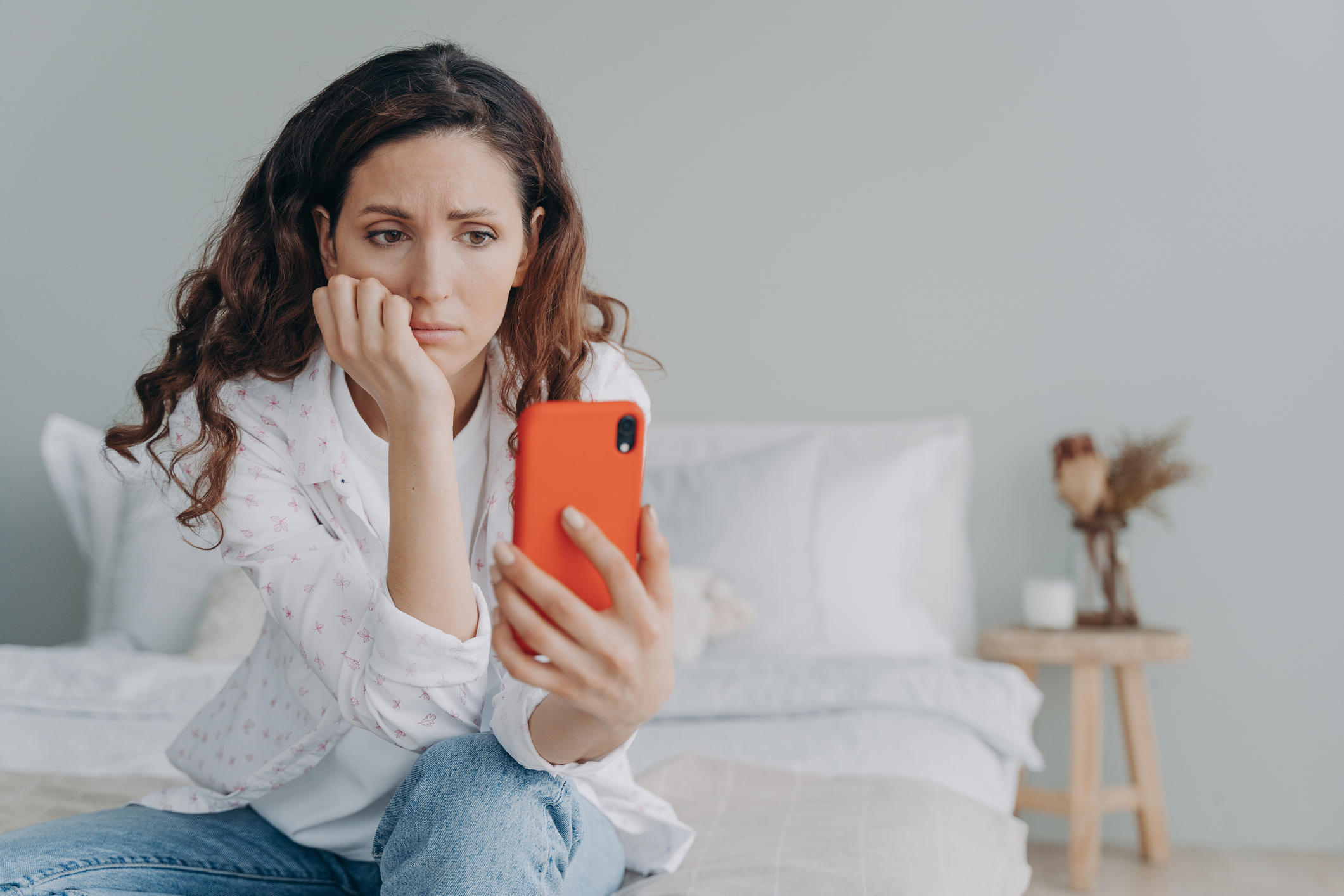
Do you feel exhausted and overwhelmed after checking the news?
You’re not alone…
Surveys show that globally, 40% of people now sometimes or often avoid reading the latest news because of its effects on their mood, stress level and sense of control — the highest figure ever recorded.
And psychologists say there’s a reason bad news can feel so hard to look away from.
Your brain was designed to notice threats. That ability helped our ancestors survive predators, storms, hunger, sickness and danger.
It was a good thing… back then.
But your brain was never designed to wake up, pick up a phone and process war, political chaos, economic fear, violent crime, natural disasters, disease outbreaks and social outrage — all before breakfast.
In other words, your nervous system may feel like it’s standing beneath a waterfall of bad news.
That’s why so many people are feeling worn down, anxious, powerless and overwhelmed by the news. No wonder it’s called doomscrolling.
Here’s why psychologists say bad news grabs your brain so hard — and how to take back control without tuning out completely…
Why your brain locks onto bad news
An article published by The Conversation explains that human beings have a built-in negativity bias. Put simply, our brains are wired to give more weight to negative information than positive information.
That bias once protected us.
If your ancient ancestor ignored a beautiful sunset, it probably wasn’t a big deal. But if he ignored a rustle in the grass that turned out to be a predator, it could be game over.
So over time, our brains learned to pay attention to danger quickly and remember it longer.
The problem is that today’s “rustle in the grass” is basically everywhere.
Instead of one local threat, your nervous system is being asked to scan the entire world for danger all day long.
And news outlets know exactly how to get your attention.
«SPONSORED»
One study published in Nature Human Behaviour analyzed more than 105,000 news headlines that generated nearly 6 million clicks. The researchers found that each additional negative word in a headline increased the click-through rate, while positive words had the opposite effect.
In other words, negativity sells.
And once you click, algorithms learn what keeps you watching, scrolling and reacting. The more threatening, enraging or heartbreaking the content, the more likely it is to pull you back in.
That’s where news consumption can turn from a healthy habit of staying informed into something that harms your long-term well-being.
Researchers have even studied what they call problematic news consumption — a pattern where news dominates your thoughts, disrupts your focus, interferes with daily life and keeps your body in a state of stress.
In one survey of 1,100 U.S. adults, about 17% showed signs of severely problematic news consumption. Among that group, nearly 74% reported frequent mental health problems, and 61% reported frequent physical symptoms.
That goes far beyond “being informed” to a place where your mind and body begin paying the price.
How to build a healthier news diet
So does this mean you have to tune out completely to protect your mind and body?
Psychologists say no…
After all, we still need accurate information so we can stay up to date on events that may affect our families, communities, health and safety.
The goal isn’t to be uninformed. It’s to stop letting every headline act like an emergency your body has to respond to.
That’s why experts point to building a healthier relationship with the news.
The key is to think about news the way you think about food.
Some information nourishes you. It helps you make better decisions, understand your world and protect the people you love.
But some information is more like junk food for the nervous system — designed to trigger fear, outrage and helplessness without giving you anything useful to do with it.
That’s why your news habits need boundaries, just like the food you put on your plate…
«SPONSORED»
Improve your news “diet”
A healthier news diet could look like this:
● Choose two short windows a day to check reliable news sources.
● Avoid checking headlines first thing in the morning or right before bed.
● Read one deeper, well-reported article instead of 20 frantic updates.
● Turn off breaking-news alerts unless they truly affect your safety.
● Be especially cautious with rage-bait headlines and social media clips.
● Ask yourself, “Is this helping me act, or just making me anxious?”
And last but not least…
● Follow difficult news with one grounding action, such as walking, stretching, praying, breathing or calling someone you care about.
Here’s why this matters…
Remember the rustle in the grass-predator scenario? Not only did the brain learn to recognize the danger in certain situations, but it also learned to send a distress signal that triggers the sympathetic nervous system.
We call this the fight-or-flight response, and it prompts your adrenal glands to flood your bloodstream with stress hormones, including adrenaline, noradrenaline and cortisol.
When you’re hit with a constant cycle of upsetting headlines, cortisol release can become constant, keeping your body in a low-grade fight-or-flight state. Your brain may know you’re sitting safely at home, but your nervous system remains on high alert, bracing for the next threat.
That can leave you feeling tense, tired, irritable, anxious and unable to fully relax. That’s adrenal fatigue. But taking a grounding action can give your body clear signals that the emergency has passed.
None of this means you have to ignore what’s happening in the world.
It means your brain and body need a break from being told everything is an emergency because reality is bigger than the worst headline on your phone.
Editor’s note: Did you know that when you take your body from acid to alkaline you can boost your energy, lose weight, soothe digestion, avoid illness and achieve wellness? Click here to discover The Alkaline Secret to Ultimate Vitality and revive your life today!
Sources:
Your brain was never designed for this much bad news — ScienceDaily
Why 40 per cent of people are avoiding the news, according to a psychologist – The Conversation
Overview and key findings of the 2025 Digital News Report — Reuters Institute for the Study of Journalism
Negativity drives online news consumption — Nature Human Behaviour
News addiction linked to not only poor mental wellbeing but physical health too — ScienceDaily
Caught in a Dangerous World: Problematic News Consumption and Its Relationship to Mental and Physical Ill-Being — Health Communication
FAQ: News fatigue and your health
Why does bad news affect me so much?
Your brain is wired to notice threats quickly. That helped humans survive real dangers in the past, but today’s nonstop stream of global crises can make your nervous system feel like it is constantly on alert.
Is avoiding the news bad?
Not necessarily. Taking breaks from the news can be healthy. The goal is not to ignore important information, but to create boundaries so the news does not dominate your thoughts, mood or stress level.
What is a healthy way to follow the news?
Try checking reliable news sources during one or two short windows a day. Avoid headlines first thing in the morning or right before bed, and choose deeper reporting over constant breaking-news updates.
Can too much news affect physical health?
Research on problematic news consumption has linked heavy, stressful news habits with more frequent mental health struggles and physical symptoms. That does not prove the news directly causes illness, but it suggests constant exposure may take a real toll.
How can I calm down after reading upsetting news?
Pair awareness with action. Take a walk, breathe deeply, pray, stretch, call someone you care about or take one small step related to the issue. Even a small action can help your brain regain a sense of control.

By Dr. Adria Schmedthorst

«SPONSORED»
