



Get Easy Health Digest™ in your inbox and don’t miss a thing when you subscribe today. Plus, get the free bonus report, Mother Nature’s Tips, Tricks and Remedies for Cholesterol, Blood Pressure & Blood Sugar as my way of saying welcome to the community!



The 3-minute signal your metabolism may be waiting for
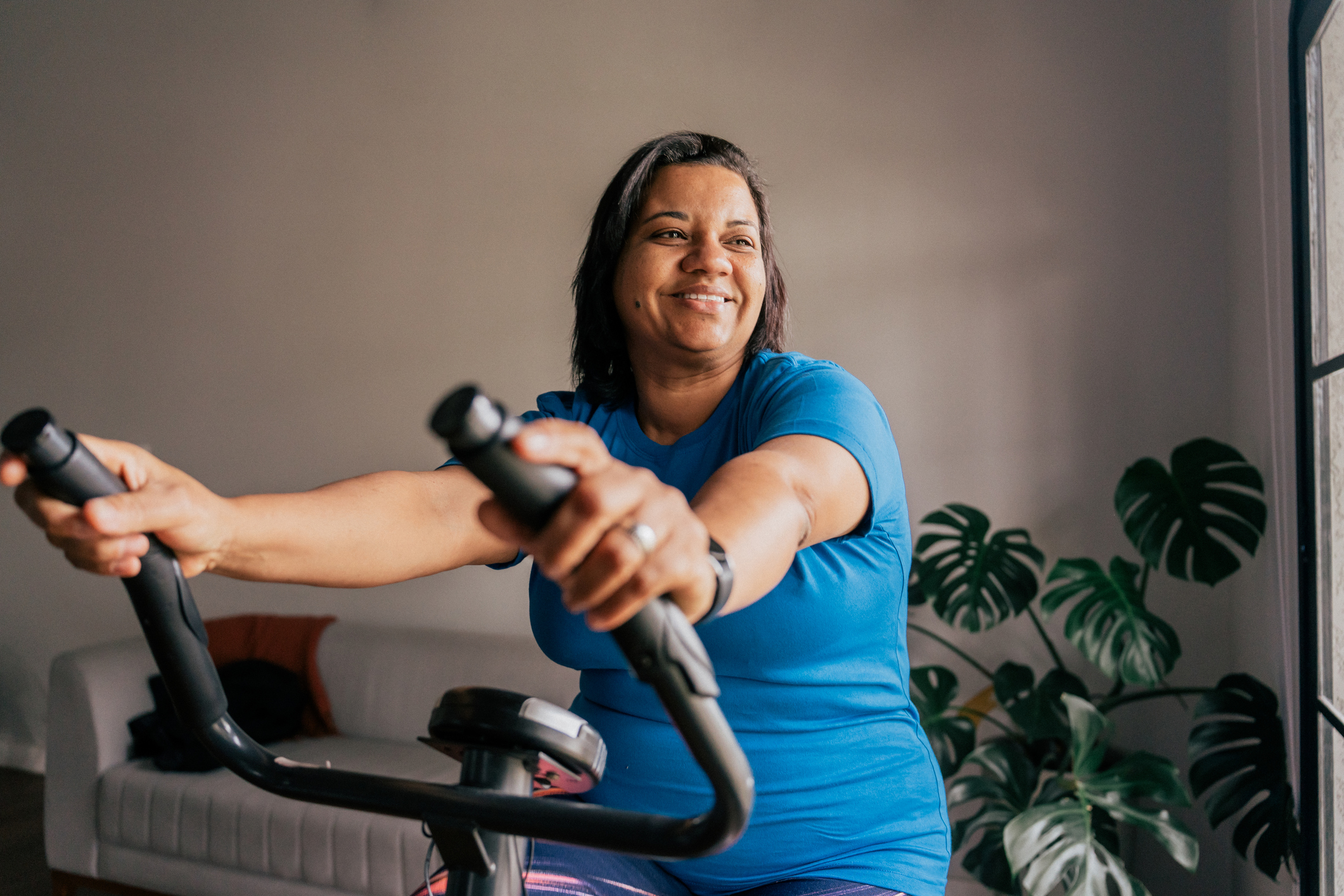
Finding time to exercise is one challenge. Having the energy to make it through a long workout is another.
So when researchers compared three minutes of all-out effort with 90 minutes of moderate cycling, the results caught my attention.
Those brief bursts triggered a striking response in the bloodstream — changing molecular signals involved in metabolism and communication between tissues.
That raises an intriguing question: Could occasionally working harder help you get something different from the time you already spend exercising?
Quick Answer
Researchers found that six 30-second, all-out cycling sprints dramatically changed proteins and metabolites in the bloodstream. Many of the responsive proteins were also associated with better cardiometabolic health in a separate population analysis. The findings help explain why exercise intensity matters, although they don’t establish that gentler intervals produce the same response.
How three minutes of hard exercise changed the bloodstream
Researchers at Rockefeller University wanted to understand how exercise intensity changes the messages the body sends.
That matters because exercise doesn’t just burn calories or strengthen muscles. It also changes the proteins and metabolites circulating in the blood. Some of these exercise-related messengers, called “exerkines,” help organs and tissues communicate after physical activity.
For the study, published in Cell Reports Medicine, one group performed six 30-second, all-out cycling sprints, separated by recovery periods. That adds up to just three minutes of true sprint effort.
Another group completed 90 minutes of moderate continuous cycling.
The main cycling comparison involved 19 young, active, metabolically healthy men: 10 completed the sprint intervals and nine completed moderate cycling. Researchers also analyzed a separate group performing moderate treadmill running.
They examined the blood immediately after exercise and three hours later.
The difference was striking.
The sprint workout changed nearly one-quarter of the blood proteins measured immediately afterward. By comparison, 90 minutes of moderate cycling altered fewer than one-quarter of one percent. Moderate running changed more proteins than cycling, but still far fewer than sprinting.
Sprinting also altered more than 200 metabolites — small molecules involved in energy use, fuel metabolism and cellular signaling.
In plain English, a few very hard bursts sent a much louder immediate signal through the bloodstream.
But moderate exercise had a different timetable. Three hours after moderate cycling, researchers found a substantial wave of changes in metabolites and liver-derived proteins.
The workouts produced different signals — and at different times.
«SPONSORED»
Why exercise intensity matters for metabolic health
One of the most interesting findings involved the kinds of proteins that changed after sprinting.
Researchers saw a rapid increase in proteins involved in blood vessel growth, tissue remodeling and hormonal signaling.
They also exposed human fat cells in the laboratory to blood plasma collected after exercise. Post-sprint plasma triggered widespread changes in gene activity, affecting how those cells processed fuel, responded to hormones and sensed nutrients.
Plasma collected after moderate cycling caused much smaller changes.
The researchers then compared exercise-responsive proteins with health data from more than 53,000 people in the UK Biobank.
Many were associated with lower risk of cardiovascular and metabolic disease. The pattern was particularly striking for obesity, type 2 diabetes and related metabolic disorders: Of 33 proteins associated with lower risk, 32 were altered by sprinting, compared with three by moderate exercise.
More than one-quarter were also associated with slower biological aging.
That does not mean three minutes of sprinting prevents diabetes, heart disease or aging. Those health associations came from a separate population analysis.
But the findings suggest that intensity may help explain why short, vigorous exercise can deliver benefits that seem larger than the time invested.
Importantly, many of the molecular responses persisted after eight weeks of training. They weren’t simply a one-time reaction to unfamiliar exercise.
How to add exercise intensity without running
The study used all-out cycling sprints. You don’t have to run or jump to work hard.
Several activities offer ways to increase effort:
- Stationary cycling: Increase your pedaling pace or resistance while staying seated and maintaining control.
- Swimming laps: Pick up your pace for part of a lap, then return to an easier effort.
- Uphill walking: A manageable incline can make walking more demanding without requiring a run.
Which option works best depends on your fitness, balance, joint comfort and experience.
The CDC offers a useful way to judge effort. During moderate activity, you can talk but not sing. During vigorous activity, you can say only a few words before pausing for breath.
Vigorous exercise is still different from the all-out sprints tested here. These options provide ways to introduce intensity; the study did not establish that they reproduce the same molecular response.
«SPONSORED»
Start with effort you can build on
If you’re already comfortable exercising, choose one familiar activity and introduce a brief increase in effort after warming up. Return to an easy pace and let your breathing recover before deciding whether to repeat it.
Build gradually. Your first goal is to learn how your body responds — not to reproduce a laboratory sprint session.
If you’ve been inactive, begin with regular walking or comfortable cycling before adding harder efforts. As we’ve explained, micro-walks may help rev up your metabolism and give you a manageable place to start.
For readers ready for more vigorous movement, our article on getting breathless for a few minutes daily explores research on short bursts during everyday life.
If you have a heart condition, uncontrolled blood pressure, significant joint limitations or recent surgery, ask your healthcare provider which activities and intensity are appropriate. If you have chest pain or dizziness during exercise, stop.
And keep strength training in the picture. Short cardio bursts should complement the work that maintains your muscles, balance and everyday mobility. Our article on muscle aging and mitochondria explains why keeping muscles active matters.
Three minutes of hard effort produced a remarkable molecular response. That doesn’t make longer, moderate exercise obsolete. It shows that intensity can change the messages exercise sends through the body.
For readers who can safely build toward vigorous activity, that’s an encouraging reason to occasionally turn up the effort — not just extend the clock.
Editor’s note: Did you know that when you take your body from acid to alkaline you can boost your energy, lose weight, soothe digestion, avoid illness and achieve wellness? Click here to discover The Alkaline Secret to Ultimate Vitality and revive your life today!
Sources:
Exercise intensity modulates interorgan communication and is associated with cardiometabolic health outcomes in humans — Cell Reports Medicine
A few minutes of sprinting could make a bigger impact than 90 minutes of moderate running — Rockefeller University
What Counts as Physical Activity for Older Adults — Centers for Disease Control and Prevention
American Heart Association Recommendations for Physical Activity in Adults and Kids — American Heart Association
FAQ: Short exercise bursts and metabolic health
What did the three-minute exercise study find?
Six 30-second, all-out cycling sprints changed nearly one-quarter of the measured blood proteins immediately afterward, along with more than 200 metabolites. Many exercise-responsive proteins were associated with better cardiometabolic health in a separate population analysis.
Does three minutes mean the entire workout took three minutes?
No. Three minutes refers to the total all-out cycling effort. Recovery periods between sprints made the complete session longer.
Can you exercise vigorously without running?
Yes. Cycling, swimming laps and uphill walking can provide vigorous exercise, depending on your fitness and effort. However, this study tested all-out cycling sprints and did not establish that other activities produce the same molecular response.
Does this mean moderate exercise is less worthwhile?
No. Moderate cycling produced a different, more delayed molecular response. Regular moderate activity remains valuable, and brief intense efforts should complement everyday movement and strength training.
Did the study prove that sprinting prevents diabetes or slows aging?
No. Researchers measured exercise-related molecular changes and compared responsive proteins with health associations in a separate population. Those findings help explain potential benefits, but they do not prove that the sprint workout prevented diabetes or slowed aging.

By Dr. Adria Schmedthorst

«SPONSORED»
