



Get Easy Health Digest™ in your inbox and don’t miss a thing when you subscribe today. Plus, get the free bonus report, Mother Nature’s Tips, Tricks and Remedies for Cholesterol, Blood Pressure & Blood Sugar as my way of saying welcome to the community!





The pesticides circulating in your body with every bite
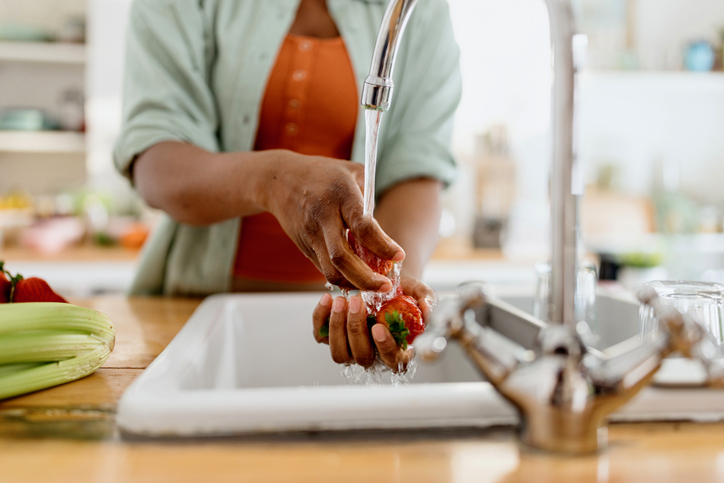
For at least a decade now, my colleagues and I have been warning you about the dangers of pesticides.
Eating fresh produce is a cornerstone of a healthy diet. Still, the pesticides used in growing them can make you sick: exposure to these substances has been linked to cancer, hormone disruption and developmental harm.
Shockingly, the problem isn’t going away anytime soon, so researchers are still working to help us make better choices…
«SPONSORED»
Real-world exposure to pesticides in our food
Researchers from the Environmental Working Group (EWG) conducted a large-scale study in several steps.
First, they gathered U.S. Department of Agriculture data on pesticide residues in produce collected between 2013 and 2018.
Then, they combined these findings with responses to dietary surveys and urine biomonitoring data from 1,837 participants in the National Health and Nutrition Examination Survey (NHANES) from 2015 and 2016.
Using all the information they gathered, the researchers developed a “dietary pesticide exposure score” that would estimate a person’s exposure based on the types of produce they ate.
Finally, they compared these “exposure scores” with 15 pesticide biomarkers in participants’ urine representing three major pesticide categories: organophosphates, pyrethroids and neonicotinoids.
In the final analysis, it was clear that there was a strong association between the types of produce people ate and the levels of pesticide biomarkers in their urine…
People who ate more produce with high pesticide residues, such as strawberries, spinach, and bell peppers, were more likely to have those chemicals detected in their urine than those who chose lower-residue options.
The researchers also learned that significant gaps exist in monitoring these chemicals…
Produce tested by the USDA contained measurable residues of 178 different pesticides. But only 42 of those chemicals corresponded to biomarkers measured in urine samples. That suggests that total exposure may be wider than current biomonitoring captures.
«SPONSORED»
Reduce pesticide intake on your plate
So, what’s a health-conscious person to do?
We need to eat a range of fruits and vegetables because they provide valuable nutrients, including antioxidants, polyphenols, carotenoids, phytosterols, fiber and essential vitamins and minerals.
But many of them serve as vehicles for delivering dangerous pesticides into our bodies.
Here are a few ways to keep eating healthy and still avoid the major pesticides mentioned above:
EWG guides. Each year, the Environmental Working Group publishes two lists that can help you make safer choices about the produce you choose to eat: the Dirty Dozen™ and the Clean Fifteen™.
Of the 47 items included in their analysis, the 12 Dirty Dozen™ represent the fruits and vegetables most contaminated with pesticides. The Clean Fifteen™ would be considered lower-residue options, according to EWG’s analysis of the most recent USDA data.
Buy organic. If some of your favorites are on the Dirty Dozen™ list, this advice is especially important. Friends of the Earth, an environmental nonprofit, conducted a study on the impact that eating organic produce has on pesticide levels in our bodies. And the results were pretty amazing…
They found that eating an organic diet for just 6 days reduced detectable pesticide levels in participants’ bodies by an average of 60.5%.
Shop Locally: Purchase from local farmers’ markets or CSAs (Community Supported Agriculture), where you can inquire about their farming practices.
Remove Outer Leaves: Discard the outer leaves of leafy vegetables like lettuce and cabbage.
Peel and Trim: Peel fruits and vegetables when possible to remove surface pesticides.
Wash Before Use: Wash produce immediately before consuming, not before storing, to keep it fresh.
«SPONSORED»
Tips for washing produce (from the EWG)
For produce with inedible peels, like avocados, rinse the surface to prevent contaminants from transferring to the inside when you peel or cut it.
For softer fruit and vegetables, such as berries, soak them, then gently rinse and rotate them to avoid damage.
For tough produce, like root vegetables, scrub using a brush or cloth under the running water to remove dirt.
Soaking then rinsing your leafy greens can clean hard-to-reach spots missed by a quick rinse.
Don’t waste your money on commercial produce spray to clean your produce. Studies show no benefit over water or a vinegar-and-water solution. In addition, you may be leaving behind residues that have not been evaluated for safety.
Editor’s note: Discover how to live a cancer prevention lifestyle — using foods, vitamins, minerals and herbs — as well as little-known therapies allowed in other countries but denied to you by American mainstream medicine. Click here to discover Surviving Cancer! A Comprehensive Guide to Understanding the Causes, Treatments and Big Business Behind Medicine’s Most Frightening Diagnosis!
Sources:
A cumulative dietary pesticide exposure score based on produce consumption is associated with urinary pesticide biomarkers in a U.S. biomonitoring cohort — International Journal of Hygiene and Environmental Health
Popular fruits and vegetables linked to higher pesticide levels — Science Daily
EWG’s guide to washing produce — Environmental Working Group

By Joyce Hollman


«SPONSORED»
