



Get Easy Health Digest™ in your inbox and don’t miss a thing when you subscribe today. Plus, get the free bonus report, Mother Nature’s Tips, Tricks and Remedies for Cholesterol, Blood Pressure & Blood Sugar as my way of saying welcome to the community!






Help your gut head off this silent heart disease trigger
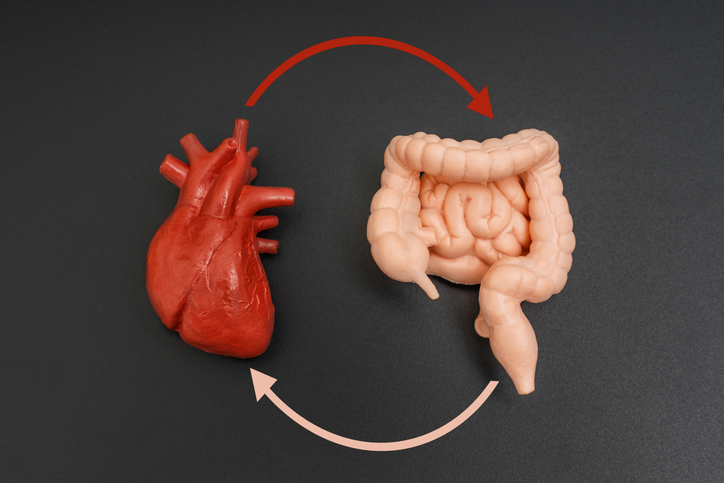
The gut is a hard-working organ.
Not only does it digest and absorb nutrients from food, but it has also been shown to help regulate seemingly unrelated bodily systems, including the brain and the heart.
Speaking of the heart, research indicates there may be a connection between the gut and dyslipidemia, a lipid imbalance that can silently raise your risk of heart disease….
«SPONSORED»
Gut bacteria may influence dyslipidemia
Even though the terms dyslipidemia and hyperlipidemia are often used interchangeably, there is a subtle difference between them.
Both terms describe imbalances in cholesterol, but dyslipidemia is a broader term that refers to a general imbalance of lipids, including triglycerides, good (HDL) and bad cholesterol, while hyperlipidemia specifically means high “bad” (LDL) cholesterol.
For more clarity, if your doctor says you have high cholesterol, they are usually referring to hyperlipidemia. About one-third of adults over 20 are said to be living with dyslipidemia.
There are a couple of factors the two share. Both hyperlipidemia and dyslipidemia raise your risk of cardiovascular disease. And both are normally detected only through a blood test, since they usually don’t have any symptoms.
Recent studies suggest gut microbes play an important role in how the body produces, regulates and degrades lipids. However, the connection hasn’t been clear.
Researchers in South Korea compared fecal and blood samples from 1,384 participants, 895 of whom had dyslipidemia. Those categorized as having dyslipidemia had blood tests showing abnormally high levels of triglycerides, total cholesterol or LDL cholesterol or low levels of HDL cholesterol.
«SPONSORED»
Using shotgun metagenomic sequencing, the researchers took a complete DNA snapshot of the bacterial community to determine which bacteria were present and which metabolic pathways they affected.
The results were fascinating…
- Participants with dyslipidemia had higher levels of Bacteroides caccae, a bacterium associated in previous studies with inflammatory and metabolic processes.
- By contrast, in those not diagnosed with dyslipidemia, researchers found a higher prevalence of Coprococcus eutactus and Coprococcus catus. These bacteria produce short-chain fatty acids that, in prior research, have shown anti-inflammatory effects, among other health benefits.
The same genetic sequencing approach was also used to study the resistome, a collection of genetic variations connected to antimicrobial resistance. However, regarding the resistome, there was no statistically significant difference between the dyslipidemia and non-dyslipidemia groups.
Gaining a better understanding of the role of the gut microbiome in lipid production and metabolism could help identify new interventions or microbiome-based strategies for people at risk of cardiovascular disease, the researchers say.
“Dyslipidemia is common and often clinically silent,” says geneticist and study leader Dr. Han-Na Kim of Sungkyunkwan University in Seoul. “Studying microbial alterations at this stage provides insight into biological shifts that may occur before clinical cardiovascular disease manifests.”
Kim says dyslipidemia appears to be associated with a reduction in bacteria linked to metabolic stability — and an enriched supply of strains “that may reflect altered lipid and inflammatory states.”
«SPONSORED»
Keeping your gut in balance
Rather than identifying individual bacteria as therapeutic species, Kim says the findings more importantly point to the need for overall equilibrium in the gut microbial community.
“Future translational efforts should focus on restoring functional balance at the community level, rather than targeting one organism in isolation,” Kim says. For instance, she adds, work building on these findings could focus on specific strategies to help people maintain or restore microbial functions connected to lipid and metabolic balance.
We’ve said it before, and we’ll say it again: to maintain the balance of your gut microbiome, you need to feed your gut what it needs.
That includes fiber, fermented foods and a “rainbow” of colorful fruits and vegetables (diverse in polyphenols and nutrients that support various bacterial species).
Reduce your intake of sugar and processed foods and choose healthy fats such as olive oil and fish.
Eating this way helps ensure a mix of probiotics and prebiotics. If you have a hard time eating right, probiotics and prebiotics supplements can help.
Editor’s note: There are perfectly safe and natural ways to decrease your risk of blood clots including the 25-cent vitamin, the nutrient that acts as a natural blood thinner and the powerful herb that helps clear plaque. To discover these and other secrets of long-lived hearts, click here for Hushed Up Natural Heart Cures and Common Misconceptions of Popular Heart Treatments!
Sources:
Gut Microbiome Connected With Heart Disease Precursor — American Society for Microbiology
Gut microbial community structure, metabolic signature, and resistome in dyslipidemia: implications for cardiovascular disease management — Microbiology Spectrum
Understanding Cholesterol: Dyslipidemia vs Hyperlipidemia — BuzzRx
Quick guide- what to look for when selecting the right probiotic strain — The Probiotics Institute

By Carolyn Gretton

«SPONSORED»
