



Get Easy Health Digest™ in your inbox and don’t miss a thing when you subscribe today. Plus, get the free bonus report, Mother Nature’s Tips, Tricks and Remedies for Cholesterol, Blood Pressure & Blood Sugar as my way of saying welcome to the community!








43 years of data reveal what coffee does to your brain
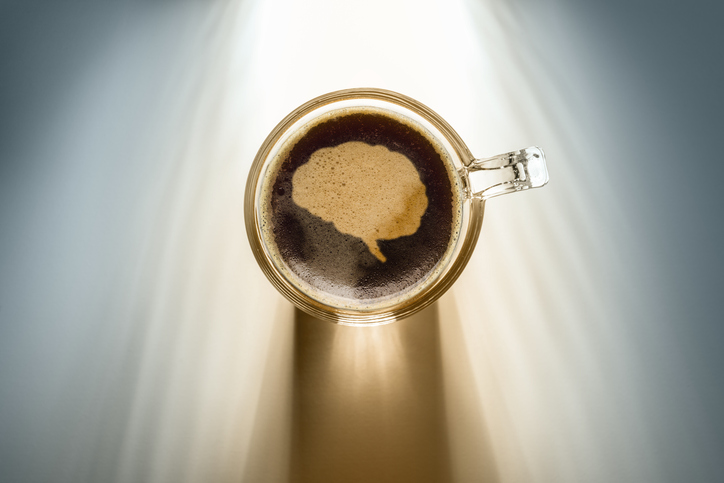
If there’s one thing I’ve learned after decades in the natural health space, small daily actions, especially the ones you don’t even have to think about, can significantly impact your health.
Like reaching for your morning cup of coffee.
That’s why I’ve closely followed the results of research into coffee’s impact on the body — especially the brain. (Well, that and the fact that I’m an admitted coffee addict.)
Yet, to say that the results of this research have left us with lingering questions would be an understatement. One study says it’s helpful. Another says not so much.
So which is it?
Is coffee quietly helping your health… or hurting it? And what about tea, our other favorite caffeinated beverage?
Now, scientists may finally have a clearer answer — thanks to one of the largest and longest studies ever conducted on the topic, which has tracked people for more than four decades.
And what they found may change how you think about your daily cup and the choices you make to keep your brain sharp.

«SPONSORED»
Why previous coffee research has been so confusing
If you’re like me, you’ve probably noticed that coffee research is all over the place.
For years, studies produced mixed, often conflicting results. Some showed benefits. Others showed no effect. And a few even raised concerns.
But there was a major problem behind the confusion: Most of those studies were too short.
This means that they didn’t follow people long enough to truly understand how coffee affects the brain over time — especially when it comes to conditions like dementia, which can take decades to develop.
That’s what makes this new research different.
43 years of data turns confusion into clarity
Investigators from Mass General Brigham, Harvard T.H. Chan School of Public Health and the Broad Institute of MIT and Harvard understood why that previous research had failed to settle the coffee debate.
That’s why they decided to do something different.
Rather than conducting a short study with a small group of participants, they analyzed data from more than 130,000 men and women from two of the most respected long-term health studies in the U.S.
And they followed up with them for an incredible 43 years, repeatedly tracking their diet, cognitive health and medical outcomes over time.
In other words, this wasn’t a snapshot of one moment in time. It was a long-term view of how a daily habit can shape brain health across decades.
And the results were striking…

«SPONSORED»
Over the course of the study, more than 11,000 participants developed dementia. But those who regularly drank caffeinated coffee had a clear advantage.
Researchers found that people with higher intake of caffeinated coffee had about an:
- 18% lower risk of developing dementia (compared with those who drank little or no caffeinated coffee)
- Lower rates of subjective cognitive decline (7.8% versus 9.5% among non-coffee drinkers)
- Better performance on certain cognitive tests
- Similar protective benefits were observed among tea drinkers, who had a roughly 14% lower risk of dementia
And here’s where it gets even more interesting…
The benefits were most pronounced in people who drank 2 to 3 cups of caffeinated coffee or 1 to 2 cups of tea per day. Notably, higher caffeine intake beyond that sweet spot did not yield additional benefits — but it didn’t cause harm, either.
As the researchers explained:
“…there are lots of important ways to protect cognitive function as we age. Our study suggests that caffeinated coffee or tea consumption can be one piece of that puzzle.”
And according to lead author Yu Zhang, MBBS, MS, PhD, a student at Harvard Chan School and research trainee at Mass General Brigham, this holds true even for those at genetic risk for cognitive decline.
“We also compared people with different genetic predispositions to developing dementia and saw the same results — meaning coffee or caffeine is likely equally beneficial for people with high and low genetic risk of developing dementia.”

«SPONSORED»
The caffeinated key to cognitive health
However, it’s important to remember that the study’s key finding wasn’t just that coffee showed benefits…
It was that decaffeinated coffee did not.
This is a significant finding — though researchers caution it’s not as simple as caffeine being the sole active ingredient, since the decaffeination process also strips out other beneficial compounds.
Along with caffeine, that includes bioactive compounds, including polyphenols, are considered neuroprotective factors that can play a critical role in protecting against cognitive decline by:
- Reducing inflammation in the brain
- Limiting cellular damage
- Supporting healthier brain signaling over time
Still, the contrast with decaf does suggest caffeine plays a meaningful role — and researchers say more work is needed to confirm the exact mechanisms at play.

«SPONSORED»
The caffeine sweet spot
The real takeaway from this research is that protecting your brain isn’t about one dramatic intervention.
What matters most is choosing small, consistent habits — like drinking coffee or tea — that, over time, keep your brain youthful and your memory sharp.
And the results also remind us that balance is important and that more isn’t necessarily better.
In this case, the sweet spot for your brain seems to be drinking either 2-3 cups of caffeinated coffee or 1-2 cups of tea each day. And those are 6- to 8-oz. cup-size servings. If you’re like me, your favorite mega mug actually holds around 12 to 15 oz.
Of course, as the researchers pointed out, caffeine is only one piece of the dementia-prevention puzzle. Don’t forget to…
- Maintain your vitamin D levels. Most Americans have insufficient levels of this dementia repelling vitamin.
- Take in these three antioxidants known for their vision-supporting properties, which have also been shown to help guard against dementia. In fact, people with the highest amounts of lutein and zeaxanthin were less likely to develop dementia decades later than people with lower levels.
- Avoid health-destroying inflammation. In one study, eating an anti-inflammatory diet slashed dementia risk by up to 31%.
- Keep both your brain and body active!
Remember, true cognitive health isn’t built overnight. It’s built over decades. Embrace these brain-healthy habits now to keep your mind sharper for years to come.
Editor’s note: Do you know that poor gums and teeth are linked to the number one killer in America? Not to mention kidney disease… rheumatoid arthritis… Parkinson’s disease… depression… and so much more. Click here to discover America’s Hidden Dental Health Crisis: How to protect yourself and your family from this dangerous public health peril!
Sources:
Consuming 2–3 cups of coffee daily associated with lower dementia risk, better cognitive function — EurekAlert!
Your daily coffee may be protecting your brain, 43-year study suggests — ScienceDaily
43-Year Study Finds Coffee May Help Protect the Brain From Dementia — SciTechDaily
Scientists tracked coffee drinkers for dementia risk over 43 years. Here’s what they found — Fast Company

By Dr. Adria Schmedthorst



«SPONSORED»
