



Get Easy Health Digest™ in your inbox and don’t miss a thing when you subscribe today. Plus, get the free bonus report, Mother Nature’s Tips, Tricks and Remedies for Cholesterol, Blood Pressure & Blood Sugar as my way of saying welcome to the community!





The vitamin D gap that summer didn’t fix

Vitamin D is called the “sunshine vitamin” for a reason.
When sunlight hits your skin, your body can make vitamin D. And for years, many of us have assumed that a sunny summer is enough to rebuild whatever vitamin D we lost during darker, colder months.
But new research suggests that may not be true for everyone.
In fact, for many people at higher risk of low vitamin D, summer sun may not be enough to restore healthy levels — even when the days are longer and brighter.
That finding comes from a new study out of Newcastle University in England. And while the study focused on people living in northern Britain, the message should get the attention of older adults here in the United States, too.
Because the risk factors aren’t limited to England. They’re the same ones many Americans face every day.
Why summer sun may not fix low vitamin D
Researchers analyzed vitamin D levels in nearly 300 people from northern Britain.
The study focused on two groups known to be at higher risk for low vitamin D: adults 65 and older, and adults with darker skin.
The numbers showed just how persistent the problem can be.
More than half of the older adults had vitamin D levels considered insufficient or deficient. Among the participants with darker skin, the number was even higher — 72.1%.
But the most surprising part was what happened when summer arrived.
Their vitamin D levels did not improve.
That challenges the common belief that spending more time outside during summer is enough to bring vitamin D back into a healthy range.
As Professor Bernard Corfe, who co-led the study, put it: “If you are in a higher-risk group, you can’t assume that spending more time outdoors in summer will solve the problem.”
«SPONSORED»
Why this matters for Americans
It would be easy to dismiss this study because it was done in England, where the climate is different from much of the United States.
But the issue isn’t only about geography.
It’s about how well your body can make, absorb and maintain vitamin D — and that depends on several factors.
According to the National Institutes of Health, certain groups are more likely to have inadequate vitamin D levels. That includes older adults, people with limited sun exposure, people with darker skin, people with obesity and those with conditions that limit fat absorption.
In other words, plenty of Americans have the same risk factors seen in this study.
Many older adults spend more time indoors than they used to. Some avoid direct sun because of heat, medications, skin cancer concerns or mobility issues. Others live in northern states where UVB rays are weaker for much of the year.
And even in sunny states, sunshine is not a guarantee.
Sitting near a sunny window won’t do the trick because UVB rays don’t pass through glass well enough to trigger vitamin D production. And as we age, our skin becomes less efficient at making vitamin D from sunlight.
That means a person can live in a sunny place, enjoy warm weather and still come up short.
Why low vitamin D matters after 50
Vitamin D plays an important role in helping the body absorb calcium and maintain healthy bones.
That’s one reason low vitamin D matters so much after 50.
Bone loss, muscle weakness and fracture risk become bigger concerns with age. And according to NIH, more than 53 million adults in the United States already have osteoporosis or are at risk of developing it.
Vitamin D is not the whole story, of course. Bone health also depends on calcium, protein, strength training, balance, hormones, medications and overall health.
But vitamin D is one piece of the puzzle you don’t want to ignore.
Low vitamin D can also contribute to muscle weakness and pain. That doesn’t mean every ache or bout of fatigue is caused by low vitamin D. But it does mean it’s worth knowing your status, especially if you fall into a higher-risk group.
Why sunshine can still fall short
Sunlight is natural. But getting enough vitamin D from sunlight isn’t as simple as “go outside.”
Your vitamin D production can be affected by:
- Age
- Skin tone
- Season
- Time of day
- Cloud cover
- Air pollution
- Sunscreen use
- Clothing coverage
- How much time you spend outdoors
- Your latitude
- Your weight
- Certain digestive conditions
People with darker skin have more melanin, which helps protect the skin from UV damage but also reduces the skin’s ability to make vitamin D from sunlight.
Older adults also produce less vitamin D through the skin than younger people do. And if you’re housebound, work indoors, avoid heat or cover most of your skin outdoors, your sun exposure may be too limited to maintain healthy levels.
That’s why the Newcastle findings matter.
They suggest that for vulnerable people, summer may not “reset” vitamin D levels the way many assume.
«SPONSORED»
What to do instead of guessing
The good news is that vitamin D status is easy to check.
A blood test called 25-hydroxyvitamin D is the standard way to measure vitamin D levels.
If you’re over 65, have darker skin, spend most of your time indoors, have obesity, have had gastric bypass surgery or have a digestive condition that affects fat absorption, it may be worth asking your healthcare provider whether your vitamin D should be tested.
That’s especially true if you’ve been assuming summer sun has you covered.
Food can help, though it’s hard for many people to get enough vitamin D from diet alone. Good sources include fatty fish, egg yolks, fortified milk and fortified cereals.
Supplementing can help, but be sure to take the right form, vitamin D3. For adults, the recommended intake generally ranges from 600 to 800 IU per day, depending on age. But that amount can barely help maintain vitamin D levels — and certainly won’t correct an insufficiency or deficiency once it’s already there.
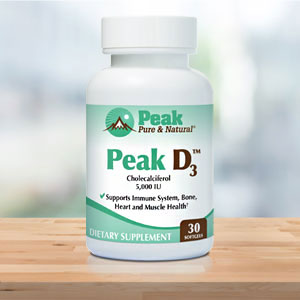
That’s why some people need a higher therapeutic dose for a period of time. A dose such as 5,000 IU daily is commonly used by practitioners when vitamin D levels are low, and it falls in a range many experts consider safe. However, the NIH still sets the general adult upper limit at 4,000 IU daily.
The goal isn’t to guess or to assume more is always better. Don’t take more than 4000 to 5000 IU daily unless under the guidance of a physician.
The takeaway
The sunshine vitamin may need more than sunshine.
This new study found that people at higher risk for low vitamin D did not necessarily recover healthy levels during the summer months. And while the study was done in northern Britain, the risk factors apply to many Americans — especially older adults.
If you’re in one of those higher-risk groups, don’t assume a sunny summer is enough.
Editor’s note: Regain your health and enjoy a full, vibrant life by defeating the real culprits of premature aging and sickness — excessive, damaging acid in your body! The truth is when you’re alkaline, wellness thrives and sickness takes a dive. Click here to discover The Alkaline Secret to Ultimate Vitality!
Sources:
Study challenges a common belief about vitamin D and sunlight — ScienceDaily. June 24, 2026.
Circannual prevalence of vitamin D insufficiency in older and minoritized ethnic adults in Northern Britain— European Journal of Clinical Nutrition. 2026.
Vitamin D Fact Sheet for Health Professionals — National Institutes of Health Office of Dietary Supplements

By Margaret Cantwell

«SPONSORED»
