



Get Easy Health Digest™ in your inbox and don’t miss a thing when you subscribe today. Plus, get the free bonus report, Mother Nature’s Tips, Tricks and Remedies for Cholesterol, Blood Pressure & Blood Sugar as my way of saying welcome to the community!





Can matcha tea replace your antihistamine?
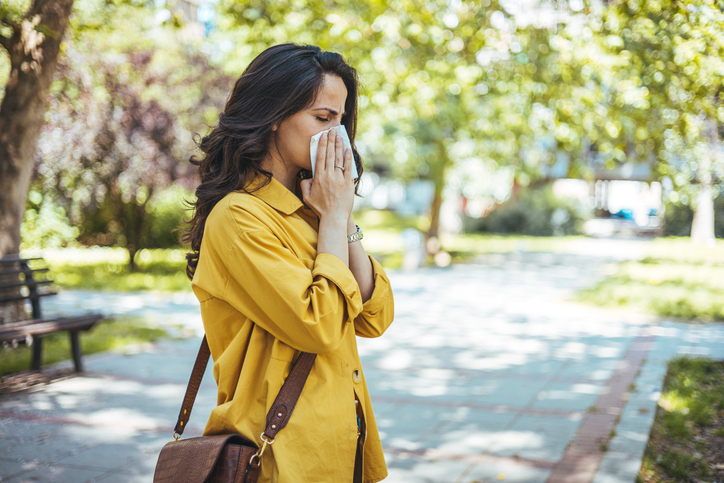
I’ve had allergic rhinitis, better known as hay fever, since I was a little girl.
Every August through early October, my life has been ruled by sneezes that wrack my body and leave me utterly exhausted.
I’ve managed to find antihistamines that temper this, and that don’t put me to sleep.
But now I’m learning that a drink I’ve never tried, one that’s good for me in other ways, too, could very well be the key to an antihistamine-free – and sneeze-free – life.
«SPONSORED»
Matcha tea: Green tea, but better
I’m a tea-drinker. I love a cup of cinnamon tea in the afternoon, and a cup of chamomile at night.
But somehow, even though I’ve heard about its health benefits, I’ve never tried green matcha tea.
Green matcha tea is not the same as green tea. Matcha tea is made from the entire green tea leaf.
When you boil green tea, you generally throw away the leaves. This means the best antioxidants never make it into your cup.
In contrast, matcha is stone-ground green tea. The entire leaf is pulverized into a powder containing all its antioxidants, amino acids, vitamins and minerals.
Matcha tea for allergy relief
Professor Osamu Kaminuma of Japan’s Hiroshima University was interested in finding out just why matcha seemed to help people with hay fever.
“Human studies suggest green tea may relieve allergic rhinitis, but how it works is unclear,” he says.
Prof. Kaminuma and colleagues fed green matcha tea to mice engineered to have hay fever.
They found that “oral matcha reduced sneezing without clearly changing major immune markers. Instead, it strongly suppressed brainstem neuronal activation linked to the sneezing reflex.”
Translated, this means that match did not act as an antihistamine but rather acted directly on the brain.
It suppressed a gene called c-Fos in the brain region that controls sneezing. When the mice experienced hay fever, the expression of this gene increased, but treatment with matcha restored it to normal levels.
«SPONSORED»
The many benefits of matcha tea
While I don’t know for sure whether drinking matcha during hay fever season will replace my antihistamines, I do know it has a long list of other researched health benefits.
Lowers risk of depression. Matcha affects serotonin and dopamine, the brain’s “happy chemicals” that both carry messages between nerve cells in the brain. Research has found that matcha appears to affect dopamine systems in mice, exerting an antidepressant-like effect.
Anti-aging. Matcha has an ORAC score of 1573, which means that one cup of matcha green tea is equivalent to 10 cups of regular green tea in terms of antioxidant power.
Other foods with high ORAC scores include blackberries, dark chocolate, and cinnamon. They help prevent the oxidative stress that causes rapid aging.
Fights gum disease. Matcha tea kills bacteria that cause gum disease, which has been linked to heart failure, lung infections, and weight gain.
And former EHO contributor Dr. Mark Wiley can share several more reasons to drink green matcha, from cholesterol reduction to detoxing heavy metals.
For more help through hayfever season, check out these 9 natural allergy remedies that won’t put you to sleep.
Editor’s note: Regain your health and enjoy a full, vibrant life by defeating the real culprits of premature aging and sickness — excessive, damaging acid in your body! The truth is when you’re alkaline, wellness thrives and sickness takes a dive. Click here to discover The Alkaline Secret to Ultimate Vitality!
Sources:
Matcha alleviates sneezing response in a murine model of allergic rhinitis — Nature Science of Food
Could a hot cup of matcha dial down the ‘sneeze switch’ in allergic rhinitis? — Eureka Alert

By Joyce Hollman


«SPONSORED»
