



Get Easy Health Digest™ in your inbox and don’t miss a thing when you subscribe today. Plus, get the free bonus report, Mother Nature’s Tips, Tricks and Remedies for Cholesterol, Blood Pressure & Blood Sugar as my way of saying welcome to the community!


These foods raise stroke and heart attack risk 67%
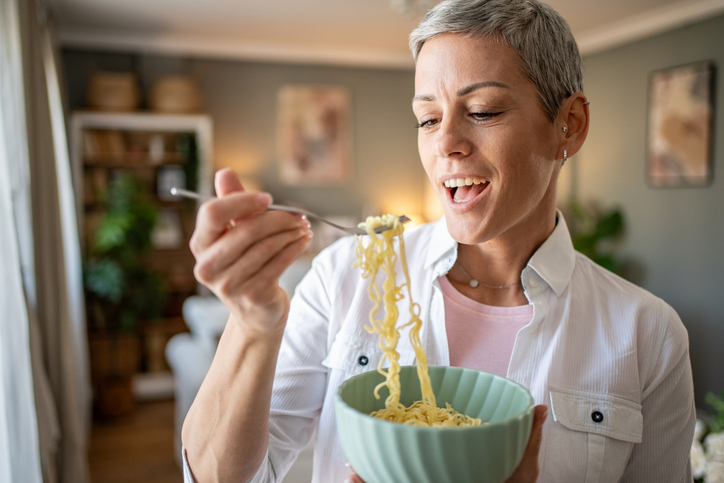
Ultra-processed foods have become a cornerstone of modern eating.
Walk through any grocery store, and you’ll find aisle after aisle of packaged snacks, sugary drinks, frozen meals, processed meats, cereals and ready-to-eat foods.
We reach for them because they’re fast and convenient — but beneath that convenience is a level of processing that fundamentally changes how your body responds to what you eat.
In fact, studies have already linked ultra-processed foods to health issues ranging from hormonal and metabolic disasters to dementia, colorectal cancer and accelerated aging.
Now your heart is in the spotlight, as research is shedding light on just how high ultra-processed foods can raise your cardiovascular risk…
«SPONSORED»
A steady rise in heart risk
Researchers at UTHealth Houston took a hard look at the impact of ultra-processed foods on the heart.
Their team analyzed data from 6,814 adults — drawn from the Multi-Ethnic Study of Atherosclerosis (MESA) — who were tracked for roughly 12 years, with data on their eating habits and cardiovascular outcomes.
What they found was hard to ignore. ..
People who ate the most ultra-processed foods — averaging 9.3 servings per day — had a 67% higher risk of dying from coronary heart disease or stroke, or experiencing a non-fatal heart attack, stroke or resuscitated cardiac arrest, compared to those averaging just 1.1 servings.
What’s more, the risk didn’t only spike at extreme levels — it climbed steadily. Each additional daily serving of an ultra-processed food had a cumulative effect, increasing the likelihood of a major cardiovascular event by more than 5%.
Why ultra-processed foods hit your heart so hard
So what makes these foods so damaging to your heart? According to researchers, the problem goes beyond the usual culprits — the fat, sugar, and salt found in them.
That’s because ultra-processed foods are typically:
- Stripped of natural nutrients.
- Packed with additives, preservatives and artificial compounds.
- Designed to be hyper-palatable and easy to overeat.
Researchers believe these foods disrupt the body at a fundamental level — triggering chronic inflammation, metabolic dysfunction, hormonal imbalance and changes in how energy is processed.
Over time, that creates the perfect environment for cardiovascular disease to take hold, which also explains why ultra-processed foods keep appearing across so many areas of health research, from brain decline and cancer to metabolic damage. It’s not one isolated effect — it’s a system-wide disruption.
«SPONSORED»
A simple shift that can protect your heart
Here’s the good news: how much ultra-processed food you eat is one of the most controllable risk factors you have.
And you don’t need to eliminate every processed food overnight to make a difference. Because risk increases with every serving, every reduction matters.
As lead researcher Amier Haidar, MD, put it: “While many of these products may seem like convenient on-the-go meal or snack options, our findings suggest they should be consumed in moderation.”
The easiest way to get there is through small, practical changes:
- Replace packaged snacks with whole foods like nuts, fruit or yogurt.
- Cook more meals at home using simple ingredients, including healthier oils.
- Cut back on sugary drinks and heavily processed convenience foods.
You don’t need perfection — you just need progress. For help identifying ultra-processed foods, check out this guide.
And if you’re ready to take it further, check out these four diets Harvard researchers say will all lower your cardiovascular disease risk.
Editor’s note: What do you really know about stroke? The truth is, only 10% of stroke survivors recover almost completely, and all doctors can offer is what to do after a stroke occurs. That’s unacceptable considering 80% of strokes are preventable! Click here to discover how to escape The Stroke Syndrome: 5 Signs it’s Stalking You — Plus the Hidden Causes and Preventive Measures You’ve Never Heard About!
Sources:
Ultra-processed foods linked to 67% higher risk of heart attack and stroke — ScienceDaily

By Dr. Adria Schmedthorst

«SPONSORED»
