



Get Easy Health Digest™ in your inbox and don’t miss a thing when you subscribe today. Plus, get the free bonus report, Mother Nature’s Tips, Tricks and Remedies for Cholesterol, Blood Pressure & Blood Sugar as my way of saying welcome to the community!





Why avocados and mangoes are a heart-healthy combination
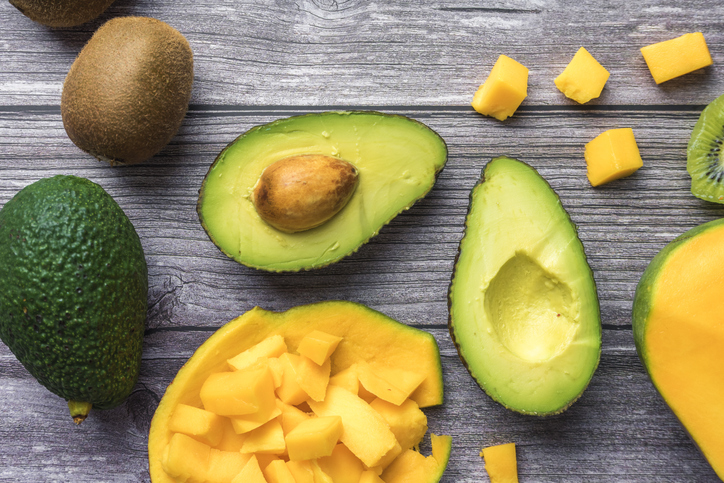
If you’ve ever seen me compose a salad for myself, you know that I routinely include avocado. A WHOLE avocado. I also consider the taste of a perfectly ripened mango as one of the most amazing flavors I have ever come across.
Imagine my delight when a recent study showed that my choices are not only delicious — but exceptionally smart!
The study published in the Journal of the American Heart Association has found that the creamy avocado and the sweet mango might just be a “dynamic duo” for supercharging heart health…
Especially if any of us is also burdened by prediabetes (which is true for nearly 120 million Americans).
«SPONSORED»
What is Prediabetes?
Prediabetes is like a yellow traffic light for blood sugar control. It means your blood sugar is higher than it should be, but not quite at the level of type 2 diabetes…yet.
Prediabetes is diagnosed based on your HbA1C value. HbA1C represents an assessment of overall blood sugar control during the last two to three months. An HbA1C between 5.7% and 6.3% indicates that prediabetes is present. HbA1C of 6.4% and above means you have type 2 diabetes.
Prediabetes is NOT a pre-disease! Individuals with prediabetes might not require medications to control their blood sugar readings…yet, but they are at significantly higher risk of heart events as compared to individuals with normal blood sugar control.
One of the reasons for this is because elevated blood sugar levels can make your blood vessels “stiff” and less able to relax.
The Study: The Mango and Avocado Challenge
Researchers wanted to see if adding specific whole foods could “fix” these stiff blood vessels. They took 82 adults with prediabetes and split them into two groups for eight weeks:
- The Fruit Group: These people added one whole avocado and one cup of sliced mango to their daily diet.
- The Comparison Group: These people ate the same amount of calories and carbs, but from processed starches and other foods instead of the fruit.
The Results
The scientists used a special test to see how well the participants’ blood vessels could widen (this is called “flow-mediated dilation”). And here’s what happened:
- The people eating avocados and mangoes saw a 1% improvement in how well their blood vessels opened up. While 1% sounds small, in the world of heart health, it is a significant “win” that shows the vessels are becoming more flexible and healthy in a relatively short amount of time.
- The group that didn’t eat the fruit actually saw their blood vessel health get worse over the two months.
- For men in the study, eating these fruits also lowered their diastolic blood pressure (the bottom number on a blood pressure reading). This number represents the pressure in your blood vessels when the heart is resting between beats and can be quite difficult to lower with medications.
«SPONSORED»
Why Does This Combination Work?
You might wonder: Why did the investigators choose these two fruits specifically? It’s all about the “Nutrient Matrix.”
- Avocados are famous for “healthy fats” (monounsaturated fats) and tons of fiber.
- Mangoes are loaded with vitamin C and special plant chemicals called polyphenols.
When you eat them together, you get a massive boost of fiber, vitamins, and antioxidants. The researchers believe these nutrients help the body produce more nitric oxide — a natural gas in your body that tells your blood vessels to relax and open up.
For reference, nitroglycerin, the medication we prescribe for people with angina, is turned into nitric oxide in our bodies, helping blocked arteries relax and increase blood flow to compromised heart muscle.
Did the Combination Impact Weight?
Study participants did not lose weight in this study. They also didn’t gain.
This is actually an important fact because it shows that you don’t necessarily have to go on a punishing weight-loss diet or expensive weight-loss drugs to help your heart. Simply changing what you eat can change how your body functions on the inside.
«SPONSORED»
How to Use This at Home
If you want to support your vascular health, simply incorporate these fruits into your daily routine — it’s actually not that hard:
- Breakfast: Avocado toast on whole-grain bread is a great choice. Substituting sliced avocado for the bacon or sausage that accompanies your eggs is an exponential power move. Cut up mango is awesome with yogurt and Anytime Sprinkle!
- Lunch: Add diced avocado to a chicken or bean salad. Use mashed-up avocado or avocado slices as a substitute for mayonnaise on your sandwich.
- Smoothies and Desserts: Add a cup of frozen mango chunks to your smoothies. Mango, on its own or with a little grated lime peel, is a wonderful, tropical-tasting dessert.
What if Mangoes Aren’t Your Thing?
Mangoes worked in this study because they are high in vitamin C and polyphenols. There are other fruits that fit this bill. In my mind, the fruit that is most highly packed with these nutrients and most likely to yield similar results is blueberries. Eating a cup of those is the way to go if mangoes aren’t your thing.
Editor’s note: Are you feeling unusually tired? You may think this is normal aging, but the problem could be your master hormone. When it’s not working, your risk of age-related diseases skyrockets. To reset what many call “the trigger for all disease” and live better, longer, click here to discover The Insulin Factor: How to Repair Your Body’s Master Controller and Conquer Chronic Disease!

By Dr. Elizabeth Klodas MD, FACC


«SPONSORED»
