



Get Easy Health Digest™ in your inbox and don’t miss a thing when you subscribe today. Plus, get the free bonus report, Mother Nature’s Tips, Tricks and Remedies for Cholesterol, Blood Pressure & Blood Sugar as my way of saying welcome to the community!





Is whole-grainmaxxing a heart-health trend worth trying?
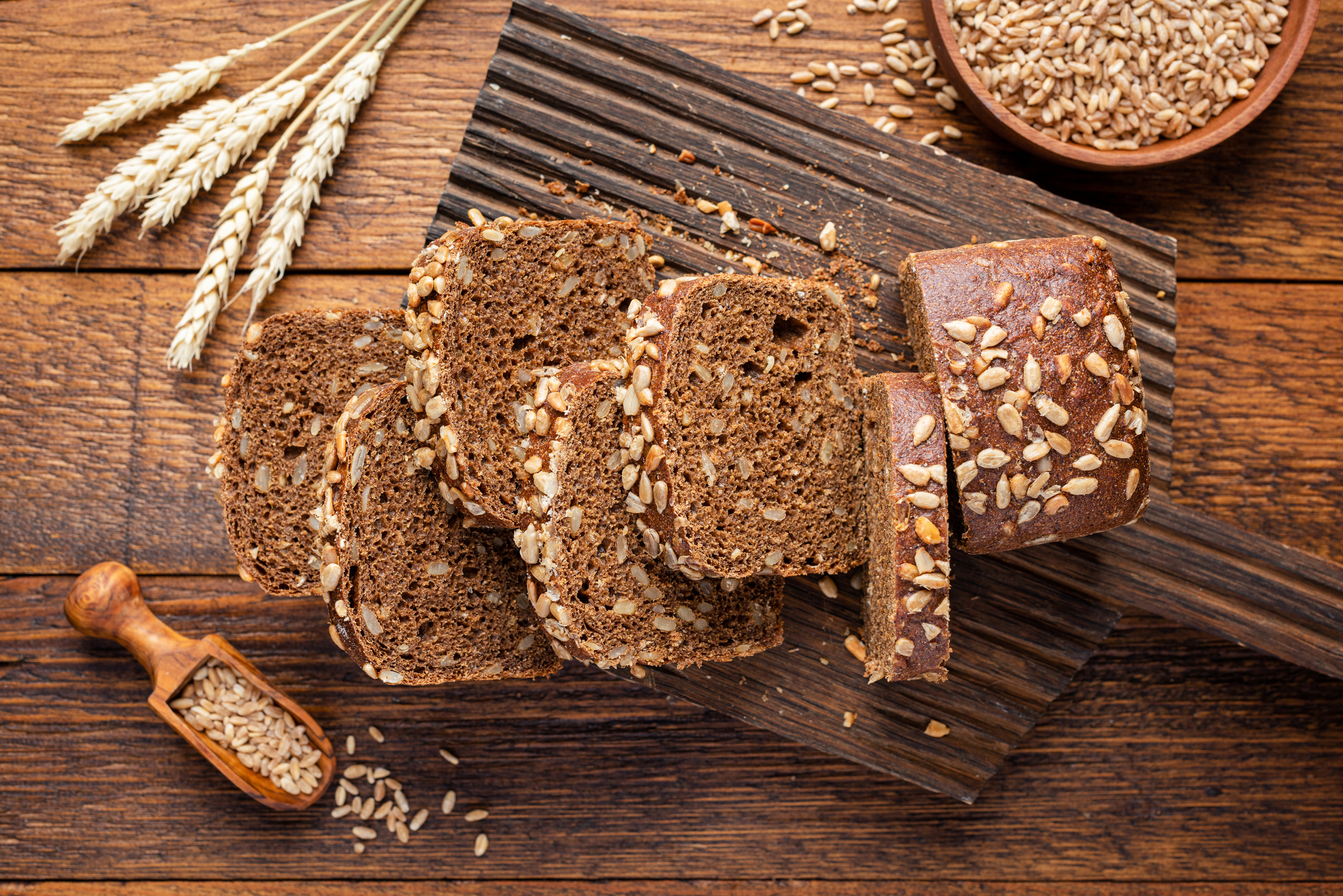
Fibermaxxing has people paying more attention to how much fiber they eat. But for heart health, there’s a related question worth asking: What happens when you eat more whole grains?
You probably know they’re a healthier choice than refined grains. What’s less clear is how much of a difference that choice makes — and whether adding another serving keeps providing benefits.
A new analysis of clinical trials offers a closer look. It suggests that whole grains may help on several fronts at once.
Quick answer
In a review of 87 clinical trials, benefits were apparent at about 30 to 40 grams of whole grains per day, measured by dry weight. The largest improvements for most cardiovascular risk factors generally appeared around 60 to 100 grams daily — roughly four to six servings. Those figures refer to the weight of the whole grains, not grams of fiber.
Why whole grains matter for more than digestion
Whole grains contain all three parts of the original grain kernel: the bran, germ and endosperm. Refining removes the bran and germ, stripping away much of the grain’s fiber and other naturally occurring nutrients.
But the heart-health story goes beyond fiber alone.
Whole grains contain a combination of fiber and other compounds that can influence several aspects of metabolic health. Researchers have long linked higher whole-grain intake with better cardiovascular health, but clinical trials haven’t always agreed on the size of the benefits or how much people need to eat.
That makes the latest research particularly useful. Rather than simply comparing people who eat more whole grains with those who eat less, investigators examined randomized clinical trials to estimate how intake levels relate to changes in measurable health risks.
«SPONSORED»
What 87 clinical trials reveal about whole-grain intake
The systematic review and meta-analysis combined 87 randomized trials involving 6,529 participants. The studies were conducted across Asia, Europe, North America, Australia and Brazil.
The dose-response analysis suggested that benefits were already apparent at 30 to 40 grams of whole grains daily, with the strongest overall effects for most outcomes occurring at approximately 60 to 100 grams per day, measured by dry weight.
That works out to roughly four to six servings, although serving sizes vary by grain and preparation. The researchers weren’t identifying a magic number that guarantees protection against heart disease. They were estimating the intake range associated with the greatest improvements in the risk factors measured.
How whole grains affect cholesterol, blood pressure and blood sugar
One of the most interesting findings is that whole grains don’t appear to influence just one cardiovascular risk factor.
For every additional 48 grams of whole grains consumed daily, measured by dry weight, the pooled analysis found modest reductions in total cholesterol, LDL cholesterol (often called bad cholesterol), triglycerides, fasting blood glucose and systolic blood pressure.
The researchers also observed improvements in body weight, waist circumference and interleukin-6, a marker associated with inflammation.
Why does that matter?
Elevated LDL cholesterol contributes to plaque buildup in arteries. High blood pressure adds strain on blood vessels, while poor blood sugar regulation can damage them over time. Excess abdominal fat and chronic inflammation are also associated with cardiometabolic risk.
Improving several of these factors together could have meaningful implications for long-term cardiovascular health, even when the individual changes are relatively small.
However, the trials measured risk factors rather than heart attacks, strokes or cardiovascular deaths. The study therefore cannot tell us exactly how much eating more whole grains reduces someone’s chance of experiencing one of those events.

«SPONSORED»
How to get more whole grains without overhauling your diet
You don’t need to rebuild your entire menu to increase whole-grain intake. The researchers and authors of an accompanying editorial emphasize replacing refined grain foods with minimally processed whole-grain alternatives.
For example, you could:
- Start the day with oatmeal instead of a refined breakfast cereal.
- Choose whole-grain bread for a sandwich.
- Replace white rice with brown rice or another whole grain.
- Try barley or quinoa in soups and side dishes.
Check ingredient labels, too. A product labeled multigrain or containing some whole grains isn’t necessarily made primarily from whole grains. Look for whole-grain ingredients near the beginning of the ingredient list.
When whole grains don’t agree with you
More whole grains won’t be the right goal for everyone. If you have celiac disease, you need to avoid gluten-containing grains such as wheat, barley and rye. A wheat allergy, wheat sensitivity or gluten sensitivity may also limit which grains work for you. And if you have IBS, the fructans in wheat and rye can trigger bloating or abdominal pain — even when gluten isn’t the problem.
If you have type 2 diabetes or insulin resistance, whole grains can still be part of your diet, but they contain carbohydrates, so portion size and your blood sugar response matter. The useful approach is to choose grains that suit your needs, rather than aim for a serving target that doesn’t.
Does eating even more whole grains provide more benefit?
Relatively few studies examined very high intakes, leaving uncertainty about whether eating substantially more offers additional benefits.
That’s why “whole-grainmaxxing” is best treated as a nudge to make sure you eat more whole grains than refined grains, rather than a contest to eat as many as possible.
For a practical first step, replace one refined grain food you regularly eat with a minimally processed whole-grain alternative. Build from there. You may find that giving an everyday food a better place on your plate is easier to maintain than chasing a rigid daily number.
Editor’s note: Did you know that when you take your body from acid to alkaline you can boost your energy, lose weight, soothe digestion, avoid illness and achieve wellness? Click here to discover The Alkaline Secret to Ultimate Vitality and revive your life today!
Sources:
Whole-grain consumption and cardiometabolic risk: a meta-analysis of randomized trials — European Heart Journal
Whole grains and cardiometabolic health: strong evidence, new questions in an ultra-processed world — European Heart Journal
Scientists find the whole grain “sweet spot” for better heart health — ScienceDaily
FAQ: Whole grains and heart health: Common questions
Are whole grains good for your heart?
The analysis linked higher whole-grain intake with modest improvements in several cardiovascular risk factors, including cholesterol and blood pressure.
How many servings of whole grains showed the greatest benefit?
For most measures, the largest benefits were generally observed around four to six servings a day, though the amount varied by outcome.
Is 60 to 100 grams the amount of fiber I should eat?
No. That figure refers to the dry weight of the whole grains, not their fiber content.
Do whole grains prevent heart attacks?
These trials measured risk factors. They did not establish how much whole grains change a person’s chance of having a heart attack.
Do I need to eat six servings to benefit?
No. Improvements were apparent at lower intakes, and replacing one refined grain food is a reasonable first step.

By Carolyn Gretton



«SPONSORED»
